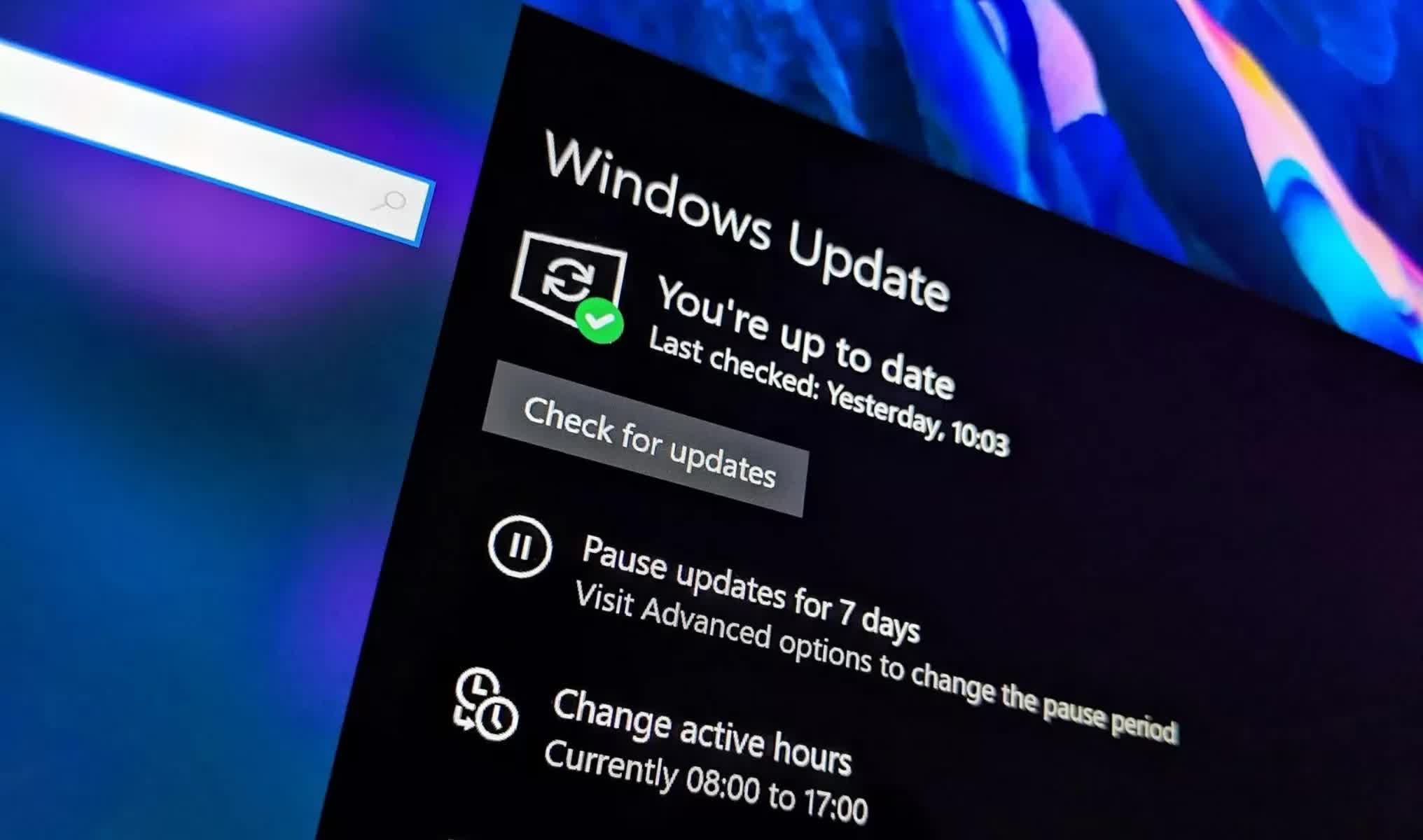
Business desktop computers - leave on 24/7 or shut down at night

timeshifter

Well-Known Member
Reaction score
2,490
Location
USA
One of my sites has 43 desktop computers. The business is open 24/7 but not all computers are needed around the clock, but 2/3 probably are. I've got all the machines to stay on 24/7 but let the screens go blank after about 4 hours. My instructions to them has been to leave the computers on. Was never really an issue and never got any pushback. Until recently.

I told a couple of employees to leave the machines on in a particular room when they were done. I got the feeling they didn't like my advice and I've noticed that the machines have been turned off.

I've always been on the side of the leaving computers on 24/7 in most cases. I think there's less wear and tear to let them run continuously. Also better for updates, scans and other automatic maintenance things.

And now for the selfish reason. I need to run some manual updates for a LOB app where I need to touch every machine. It's kind of a pain right now as 10 of 43 are off right now. These kinds of things are much easier to do after hours for me when they're not busy or in use. And I can do it remotely. But not the 10 that are off. Ugh.

I plan to make the case to the owner that employees need to stop shutting down the machines. But want to feel 100% confident in my presentation.

I think we may be getting pushback / resistance from some of the users because they're concerned about energy usage. To that end I should point out that the PCs are all All-in-One's with SSDs, don't know how much they draw.

What do you all think?
 
Every machine that was offline during the out of band maintenance is then maintained during business hours at full billable rate.

These extra charges are separated on your invoice, hand it to the people that pay your bill and suggest they bill their employees for the extra work.

The Windows Update problem I solve by simply forcibly rebooting the systems during the day when I see them on. It generates complaints, to which I tell them if they want the machines to be maintained such that it doesn't interrupt their day, they need to leave them on.

P.S. Employees don't set this policy, employers do... make them sort it.
 
The only objection I'm not 100% comfortable handling is if they worry about the added electrical costs of running 24/7.
 
This will turn into a clusterfeck in future, ok am going to inconvenience you [ and me lol at a certain time] and I require FULL ACCESS of all systems [ Go HAL2000 on them ] on this if you don't agree well...
 
I'm with @Sky-Knight on this one. The employee's unquantified desire to save electricity costs does not override the employer's policy. The savings in electricity will be far far outweighed by the extra billings necessary plus the necessary employee downtime to do the updates during working hours. This is an employer decision - tell them the costs both ways and they can decide. I'm pretty sure they will side with you. Then, employees that don't follow the edict create an HR problem that isn't yours to solve. You just get to bill extra.
 
Suggest it doesn't matter but to set a Group Policy to turn off the monitors after about 10 to 15 minutes of non use. That will stop the complaints, and there is no reason to have monitors lighting up hallways for 4 hours.

Everywhere I work leaves them on to get updates, software pushes, etc. In fact our polices push hard after-hours, so the majority of the network congestion doing things like updating Windows 10 happens off the clock.
 
The only objection I'm not 100% comfortable handling is if they worry about the added electrical costs of running 24/7.

Again, this is the employer's problem, not yours.

You are making a business case here. In all my years of being employed by others, I never expected that every one of my personal preferences, about anything, were going to be met.

If the employer wants "not during the business day" maintenance that means the machines must be available for same during those hours. And since it sounds like you're not on site that means leaving them on overnight.
 
turn off the monitors after about 10 to 15 minutes of non use

Indeed. Monitors (at least historically, less so now) were one of the major "power sucks" when constantly running.

It's just a good idea to turn them off after fairly brief periods of non-use anyway. It's not like it takes any appreciable time for them to spring back to life when you move that mouse or touch that keypad.
 
For many...many years, going back to the Win3/95 days, with the big CRT monitors....I was of the frame of mind of:
*Leave the computers running. Each time you power a computer on, it's like a kick in the head. Also, "thermal creep" is a thing, and back in the old days, when peripherals were always an ISA or PCI card, on/off...on/off....on/off....on/off....with the ensuing heat up/cool down...heat up/cool down...etc etc...causes more issues than not.
*It was the CRT monitors, and big laserjets, that used more electricity. Turn them off when everone leaves, and on when they come in.

I noticed, over the ~30 years of this gig, clients that did that....has less problems than those who did daily power up/downs.

These days, with "integrated motherboards", and "solid state drives", and lower power CPUs, computers generally don't have thermal creep issues anymore. And LCD screens don't suck juice like they used to. But I have my clients leave all on anyways, for maintenance routines, etc. Reboots managed by the RMM weekly with patching.
 
Any way to "show 'em who's boss" by not letting them shut down or automatically turning the right back on or back on later? They all have SyncroMSP agents.
 
@timeshifter Yes... but why? Users need the ability to reboot their machines, and if you take away their ability to do that you make your own life even more difficult.

The cure is worse than the poison, have a conversation with the business owner. People can be adults, or they can be replaced. Or... you can bill a premium for the annoyance. There is no place in here where you don't win.


But again, that policy and the associated registry change that goes with it disables ALL shutdown options, including restart. So are you responsible for killing the equipment during an electrical storm now? How about if there's a grid fault?

Settings like this make things HARD during an emergency, while also preventing all the tickets solved by a reboot from self servicing. Deployment of such is foolish.

Besides, all those employees will do is start holding the power button. Because 4 seconds in force off still works, and it will break even more things.
 
Yes... but why?

Agreed. This has to be the minority of employees, and those who do it more than once should be promptly dissuaded from doing so by their employer once you present the list of "machines I couldn't work on because they were off" more than once and where a pattern has emerged.

People being people there will be the occasional, "I shutdown meaning to restart, but got distracted before I left that night," thing, but that's not a pattern.

We should all be permitted the occasional, "Oops!" It's the ones who insist on making your (and, indirectly, their own) lives miserable by shutting down nightly that need to be stopped, and it's not your job to actually stop them.
 
Yep, never use technology to solve a human problem... use it to solve every other kind of problem, but never a human problem.
 
Yep, never use technology to solve a human problem... use it to solve every other kind of problem, but never a human problem.

It's funny, but I have a mug that my dear, departed mother gave to me shortly after I got my undergraduate degree in computer science many, many moons ago that says, "To err is human, to really screw things up requires a computer."

While I get precisely the point it was trying to make, I also quickly determined that, without the opening clause already having occurred, the closing clause doesn't, either.
 
A combination of Wake-on-LAN, BIOS power-on or both should satisfy your and the client's requirements.
This is honestly a better solution and the prep and setup of WoLAN or BIOS scheduled power ON are billable. It would fall under the change clause on my contracts. Add, Remove, or Change is billable, and changing how and when we get a maintenance window falls under that.
 
One of my sites has 43 desktop computers. ...

I told a couple of employees to leave the machines on in a particular room when they were done. I got the feeling they didn't like my advice and I've noticed that the machines have been turned off.

Time to talk to the bosses there, not employees...
Let them know you need them up and running in order for you to do what you have to do...patching, software updates, maintenance, etc. Remind them how little electricity the computers use these days, and remind them how it's better for computers in the long run. And circle back to...you need them on to do what you have to do.
 
Back
Top