Most people don't think of extreme weather as a technology problem until their computer stops turning on. El Niño is a climate pattern that drives conditions toward the extreme – prolonged heat in some regions, heavy storms and flooding in others – and every one of those scenarios creates a real risk for your hardware and data.
Extreme weather puts pressure on hardware in ways most people don't think about until something fails. Whether you're bracing for a hotter, drier season or expecting heavier rainfall and storms, the risks to your computer and your data are real, and most of them are preventable with a bit of preparation before the season hits rather than after.
Power is the first thing to worry about
Storms bring lightning, and lightning strikes trees. Trees fall on power lines, and power lines deliver a surge of electricity into everything connected in your home or business. A surge doesn't have to be dramatic to cause damage: even a brief spike can kill a hard drive or fry a motherboard without any visible warning.
The other side of the same problem is power dropping too low. Brownouts happen when the grid is under heavy load, typically from air conditioning during hot weather. They can be just as damaging as surges, because a drive that's in the middle of a write operation when the power dips can corrupt data or fail outright.
A standard power strip offers no real protection against either of these. A UPS, or uninterruptible power supply, is a device that sits between your power outlet and your computer. A good one regulates both over-voltage and under-voltage, giving your hardware clean, stable power regardless of what the grid is doing, and keeps everything running long enough to save your work and shut down safely if the power goes out entirely.
Heat does quiet damage
Sustained heat accelerates wear on components that are already under stress. Fans work harder, drives that were already running warm push closer to failure, and a machine that's been running hot for weeks is more likely to fail at the worst possible moment. If your computer lives in a room without reliable cooling during a hot spell, it's worth making sure the vents are clear and the fans are actually spinning properly.
Depending where you are, the bigger risk is losing everything
Power events and heat damage your hardware, but fire and flooding can take out your entire location.
If you're in a region prone to bushfires, the scenario isn't a damaged computer but a building that no longer exists. If you're in a flood-prone area, the result is the same. In both cases, a backup drive sitting next to your computer shares exactly the same fate as your computer: it goes with everything else.
The answer is off-site backup, and it doesn't have to be complicated. Cloud backup runs automatically in the background and stores your files somewhere that a fire or flood can't reach. Alternatively, a drive kept at a relative's place or a separate location works just as well, as long as it's actually being updated regularly.
The thing most people discover after a loss is that they had a backup in some form, but it was in the same room as the computer it was backing up. That's not a backup; it's a second copy of the same risk.
Get it sorted before the season hits
El Niño conditions don't announce themselves with a polite warning. A surge happens in seconds, a heat event builds over days, and a fire or flood can move faster than you'd expect. The preparation that feels optional right now becomes the thing you wish you'd done the moment something goes wrong.
If you're not sure whether your current setup is protected, it's worth getting it checked before the weather turns. A UPS, clean vents, and a proper off-site backup strategy aren't expensive fixes, but they're the difference between a bad weather event and a genuinely bad day.
Blog Content
Email Templates
Social Media
Social Media Tech Bytes

El Niño is bringing extreme weather. Most people don't give their computer a second thought.
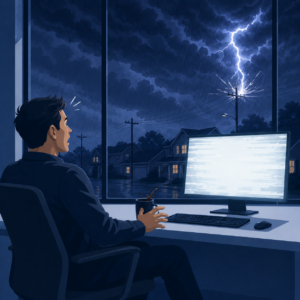
A surge, a brownout, or a total outage can kill your computer and take your data with it.

Fire or flooding takes out the whole location; a backup sitting in the same room is gone too.
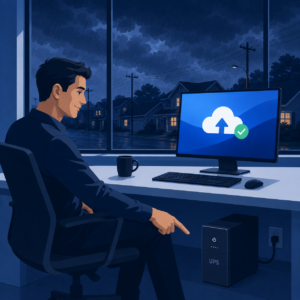
A UPS handles power threats. Offsite backup handles the rest. Sort it before the season hits.
This content is part of September 2026 release.